Wednesday, April 05, 2006

Death Disco

The joke, of course, may well be on me if fifteen years from now
everything on the radio sounds like this.
But it wouldn’t surprise me too much.

—On Second Edition, from the
August 1980 issue of
Stereo Review

separator

PiL performing “Death Disco”
“Top of the Pops,” 21 July 1979

Simon Reynolds’s justly hailed (and newly released, stateside) Tear It Up and Start Again: Postpunk 1978-1984 [the book’s website is here, on Amazon here, and flogged on Slate here] has shone the spotlight on PiL’s first big American single, “Death Disco” (later redubbed “Swan Lake” for its Metal Box/Second Edition release on LP) : Reynolds cites the television performance on the BBC’s “Top of the Pops”—the UK’s answer to “American Bandstand”—as one of the seminal musical moments in his young life. Inevitably, a clip has surfaced on YouTube, and a small viewer is posted here for your listening pleasure (and more, with Lydon’s plaid suit and Wobble’s leering, toothy grin—he’s sitting on a dentist’s chair for the duration).

separator
Death Disco clip
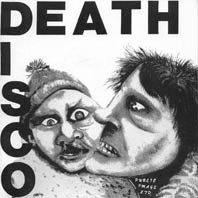
“Swan Lake,” 7" sleeve (1979)

“Swan Lake” still sounds great—it feels as alien and as winsome as it did in 1979, when I’d sit, hunched over a speaker, trying to make sense of what seemed like pop, but also quite unlike pop. Cannily transposing Tchaikovsky’s theme to anchor the composition, they are the only notes given to the guitar (Wobble’s bass shoulders the lead). But it was the new end tacked onto the LP version—and not heard on the TotP clip—that really got me, and still does: it sounded like nothing I had ever heard before. Some 3:50 into the selection, a passage that is anchored by a bubbling, atonal bass line and punctuated by a shimmering synth aurora borealis (foreshadowed a few dozen seconds prior) is clipped, and cut-and-paste-repeated four additional times. More than a decade of studio magic—overdubbing and looping—had preceded the release of Metal Box, and yet there was something radical about the simple juxtaposition of the clip with itself, and its abrupt beginning and end that seemed to herald the dawning of a new pop. It may be that all music crit is an elaborate justification of taste, but Second Edition—hey, it’s less than $7, new!—is worth sampling at twice the price.

Labels: , ,

Wednesday, November 30, 2005

Polish trifecta

Andrzej Wajda’s Ashes and Diamonds has all the hallmarks of a difficult European movie: it is concerned with an unfamiliar postwar history, produced under strictly controlled Stalinist oversight, and filmed with meager resources. Yet Popiól i diament is accessible, visually sophisticated, and startlingly modern. Some background, from Criterion’s entry on the film:

Popiol i Diament
In 1999, Polish director Andrzej Wajda received an Honorary Academy Award for his body of work—more than thirty-five feature films, beginning with A Generation in 1955. Wajda’s second film, Kanal—the first ever made about the Warsaw uprising—secured him the Special Jury Prize at Cannes and started him on the path to international acclaim, secured with the release of his masterpiece, Ashes and Diamonds, in 1958. These three groundbreaking films ushered in the “Polish School” movement and later became known as the “War Trilogy.” But each boldly stands on its own—testaments to the resilience of the human spirit, the struggle for personal and national freedom, and Wajda’s unique contribution to his homeland and to world cinema.

One quickly grasps the fundamental tension of post-WWII Poland necessary to get into the movie: the populace, dependent on the Polish Home Army (actually, the Sluzba Zwyciestwu Polski—Service for Poland’s Victory—or SZP) during the Nazi occupation, is put between the incoming Soviet-backed Communist regime and the SZP’s resistance of the Stalinists. If you’ll pardon me, I’d like to go directly to a key critical angle: Wajda was fishing for an viewers under similar constraints. As Paul Coates puts it in his essay for the War Trilogy package, “[c]riticize the Home Army too strongly and the audience will turn on you; offend the regime, and your film might be amputated or aborted.” Given the inhibitions under which Wadjda was operating, it’s remarkable that Ashes and Diamonds is so balanced and at ease; in fact, this balance is one of the wellsprings of its modernity.

Ashes and Diamonds still

The other source is Zbigniew Cybulski’s electrifying performance as Maciek Chelmicki, the SZP resistance fighter who is tapped to assasinate a local Communist party secretary; Cybulski, a fish out of water, dressed in fifties beatnik garb down to his dark glasses—the actor refused to don period costumes, unlike the rest of the cast—is near-unanimously likened to James Dean, a rough contemporary, but there’s something of a young Brando in him, too. (Wajda, on yielding to Cybulski’s sartorial preferences: “I think that was the moment when I became a director. I was able to not direct what didn’t need to be directed.”) By all accounts, the young audience for the film found, in him, a countercultural spokesman.

Ashes and Diamonds poster

Criterion’s extras on Ashes and Diamonds are typically excellent; of particular interest is a revealing interview with the director who, on the precipice of the era of the auteur, demurs. The imagery and cinematography is exceptional—many writings dwell on the scene where Maciek lights afire the shot-glasses of vodka on the hotel bar, evoking votive candles; or mention the scene where a white horse wanders into the frame outside the hotel; or the striking image of Maciek and the barmaid (who figures prominently in activating his emotions on the night they make love) in the churchyard, with an inverted, crucified Christ bearing a crown of needle-like thorns [pictured, although the reduced resolution does not do it justice]. Wajda reports that Andrei Tarkovsky was reputed to admire the penultimate scene, where Maciek’s wound is revealed as he is hiding amidst white bedlinens, billowing on an array of clothelines at the outskirts of town. As the assassin clutches a sheet to his abdomen, a red bloodspot is revealed—a visual allusion to the Polish colors, visible as Maciek departs the hotel on the way to his murderous act.

It is hard to avoid the conclusion that, in spurning the auteur’s persona, Wajda found the balance that he sought, a balance that was necessary for the film to find its audience. Its presence is everywhere one looks: from politics to Maciek’s acute awareness of a choice between the seductiveness of a “normal” life with the blonde barmaid and the heroic life of the soldier fighting the Communists; the character of the party secretary, whose son is one of Maciek’s SZP brethren, is rendered in shades of gray; with the dynamic presence of Zbigniew Cybulski, it seems as if it were filmed ten years more recently than 1958. This is already an overly long post, so I ’ll end with a quote from the interview with Wajda, revealing a humility not often associated with artists, and illustrating, again, his effectiveness.

The secret of our war films was that with those films, we augmented our biographies. I didn’t participate in the Warsaw uprising, but I made Kanal. I didn’t find myself in situations like Cybulski or Maciek Chelmicki in 1945, but I made Ashes and Diamonds. I didn’t particpate in the kind of operations depicted in A Generation, or in the kind of bravado portrayed in the film Lotna. So these films became a substitute for parts of my life.

separator
From the Imagination series
From the Loneliness series
From the “Imagination” and
“Loneliness” series (2005)

Pawel Fabjanski, a young Polish photographer who graduated from Polish National Film School in June, has been on a roll. His website touts several awards, current shows in Warsaw and Vienna, and a profile in issue number 424 of French Photo magazine, all since his degree; his commercial-savvy “pink rabbit” series was a winner of Arctic Paper’s competition that landed the nuclear power plant image [inset right] in the “Cool Solutions 2006” calendar. Not busy enough, apparently: the beautiful Christmas lights image is from his new “Loneliness” series.

separator
TOMASZEWSKI: Symfonia pastoralnaLIPINSKI: Polowanie na but
TREPKOWSKI: Mistrzostwa Europy w boksieLIPINSKI: Zolnierki
Polish cinema posters

[Via Coudal, a] searchable database of classic Polish film posters, with images, mostly from the 1950s through the 1970s; thumbs exhibited are the cream from Henryk Tomaszewski, Tadeusz Trepkowski, and Eryk Lipinski, original graphic designers commissioned in 1946 by Film Polski (a state film distribution monopoly). The site’s proprietor has commerce on his mind—“[t]he best works should reach the $10k range within a decade, and an average price may easily quadruple. Right now, they are still a bargain…”—but the rest of us can still admire.

Labels: , ,

Tuesday, September 27, 2005

Freakin’ brilliant

A frame-by-frame analysis of Blue Velvet at Digital Poetics [via Coudal].

'Blue Velvet' frame 28
Frame 28 [look closely]

Update: Site has been pulled down, alas. [cws::29Sep]

Labels: ,

Tuesday, September 06, 2005

Reality

In the beginning of the summer, it looked to be a fairly dismal TV season, with only a few items warranting notice:
  • True Entertainment, a reality TV production company and subsidary of Endemol (oh, no, that’s Big Brother's Big Brother) announced in July that they’re looking to air a new series centered around contestants looking to be political operatives when they grow up; in other words, they’re looking for the next, better-looking, Karl Rove. I would actually watch this show, which bodes ill for its future;
  • The continued delight of “Laguna Beach,” (MTV, Mondays at 10p) and the sudden shock that “Big Brother 6” (CBS; Tuesday at 9p , Thursday and Saturday at 8p) was watchable and even kinda interesting, despite the long (and continuing) history of insipid contests and contestants. This season, though, we are treated to a substantial population who avow that the secret to winning is by playing smarter—it almost never works out that way—and blessed with a group who think they are smarter than they really are.
separator
Haifa Wehbe with goats (For Her)
Haifa Wehbe on the cover
of For Her

But, as usual, the most illuminating and important stories are taking place outside of our field-of-view: in the Arab world, “Al-Wadi,” a reality program that looks to be a hybrid between “Big Brother” (the popular Middle East Broadcasting Centre edition of the franchise was abruptly cancelled in last year’s inaugural season) and “The Simple Life,” is aired by the Lebanese Broadcasting Corporation and is taking the region by storm.

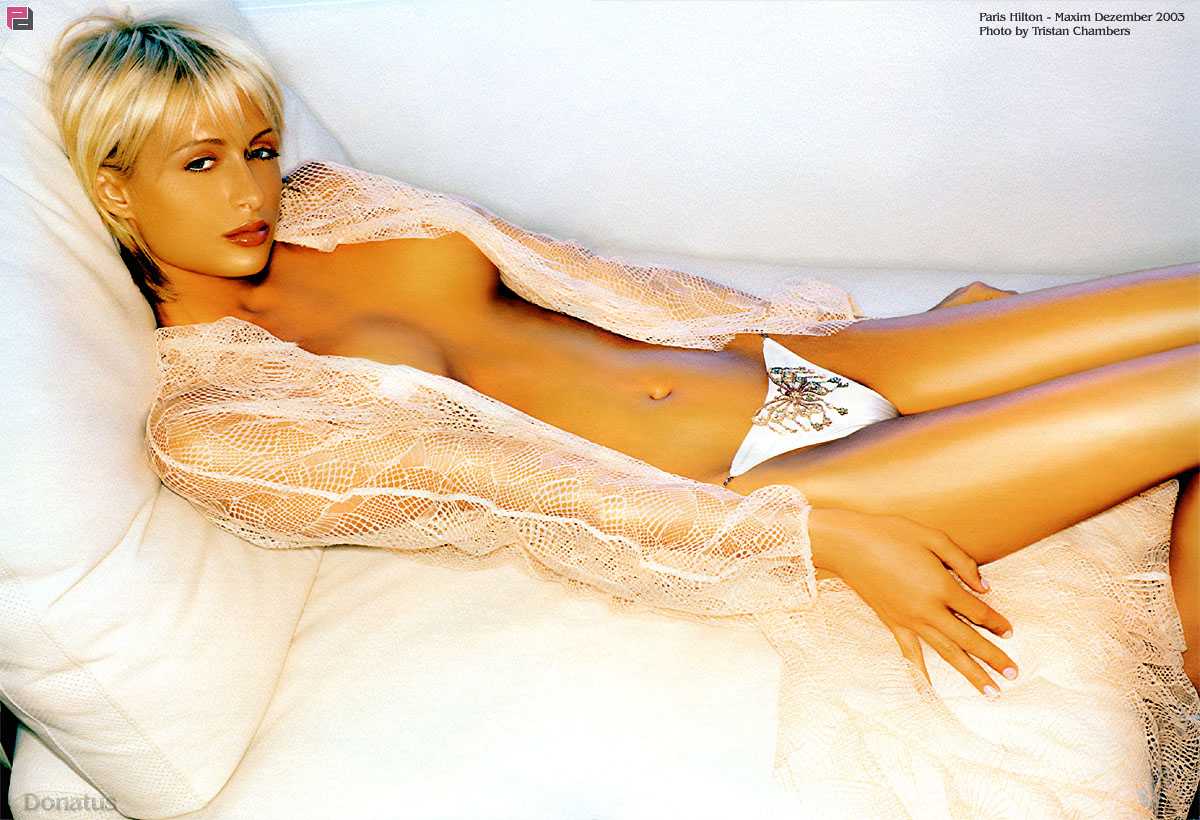
On “Al-Wadi,” video-clip siren Haifa Wehbe plays Paris Hilton [see inset, left]; so, the esteemed Abu Aardvark can be expected to be on the case in his usual coverage of The Nancy-Haifa Culture Wars. The show’s website has to be seen to be believed; anyone who watches the slightest bit of reality television will have no problem recognizing common scenes, tropes, and situations. Here’s Haifa, clad in a L.A. Lakers tank-top, in a snap that could be out of the American BB; and a fetching Haifa posing with a burro (images courtesy of Marc Lynch).

Labels: , , ,

Monday, September 05, 2005

Pamuk’s Istanbul, and mine

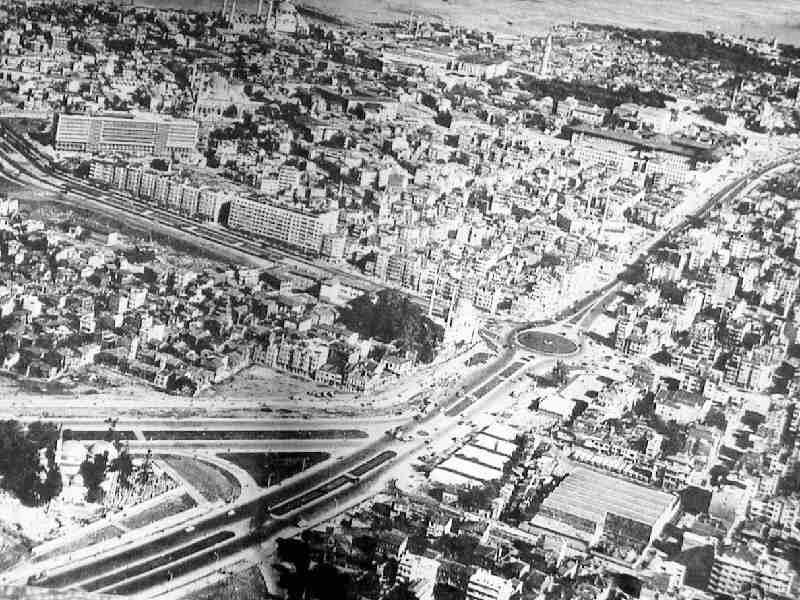
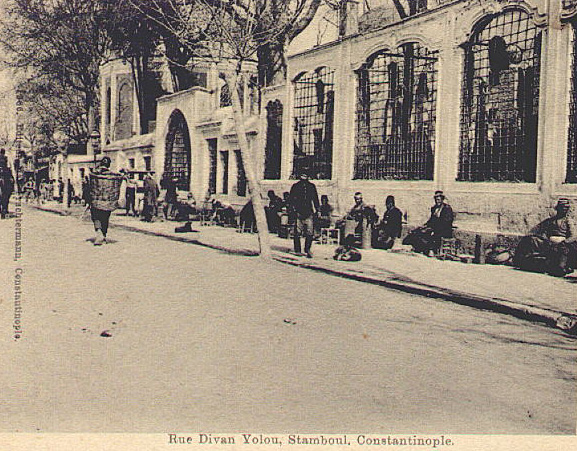
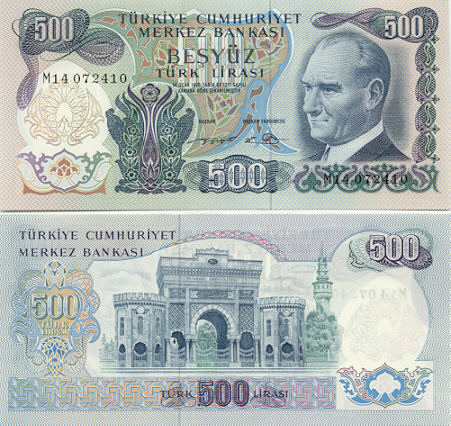
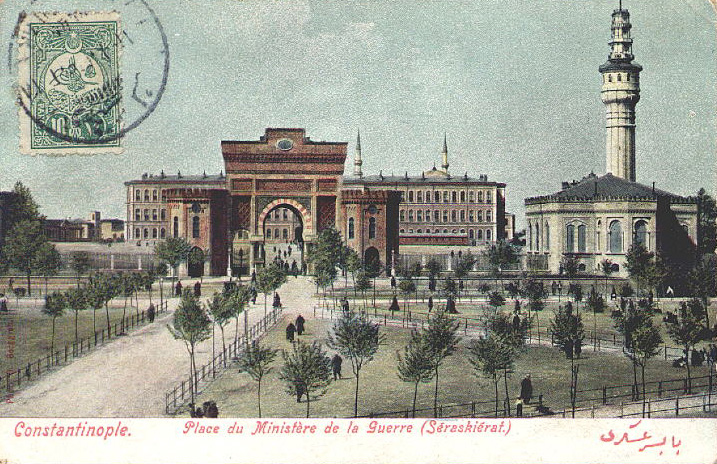
I impulsively journeyed to Istanbul as a young man in the early 1980s, after I discovered a Victorian travelogue (Constantinople: City of the Sultans, by Clara Erskine Clement) in a Santa Barbara antiquarian bookstore (here, I think, though I can no longer be certain). It was a peculiar time to visit—I arrived to guns on the tarmac unaware that the city was under martial law, and that the Turkish economy was in shambles—but in many ways it was the perfect moment. Even as the population had grown steadily since the 1960s (and was to take off around 1980), much of the boom was on the Asian side of the Bosporus, as well as on the outskirts of the European city, in sprawling shantytowns I encountered on the bus-ride from the airport to the old city.
Istanbul panorama
Upon disembarking in Acksaray, walking down the muddy, semi-paved street towards Sultanahmet, I wandered (and wondered) for weeks, primarily on the south side of the Golden Horn—haunting the mehanes, the pudding shops, and the dark tea houses with raki-drinking, television-watching, middle-aged men, the omnipresent visage of Atatürk overlooking the proceedings; streets filled with the clacking of printing presses (plus the occasional chorus from Thriller) and narrow passageways with old men smoking hookahs; the heavy quiet of Beyazit Square on a hot summer afternoon, with a nearby convenience store on the southern outskirts selling lukewarm ayran, or warm Pepsi out of wooden crates, or black currant juice (my favorite); the outdoor market amidst traditional wooden houses in Vezneciler, with tables of slender, striated Asian eggplant; the medical school with the fluorescent-lit vitrines, showcasing hand-painted, plastic models of the human body; the rural snack-sellers of simits, roasted ears of corn, cucumbers-peeled-before-your-eyes, and the minced-mussel sandwiches vended by watermen.

separator

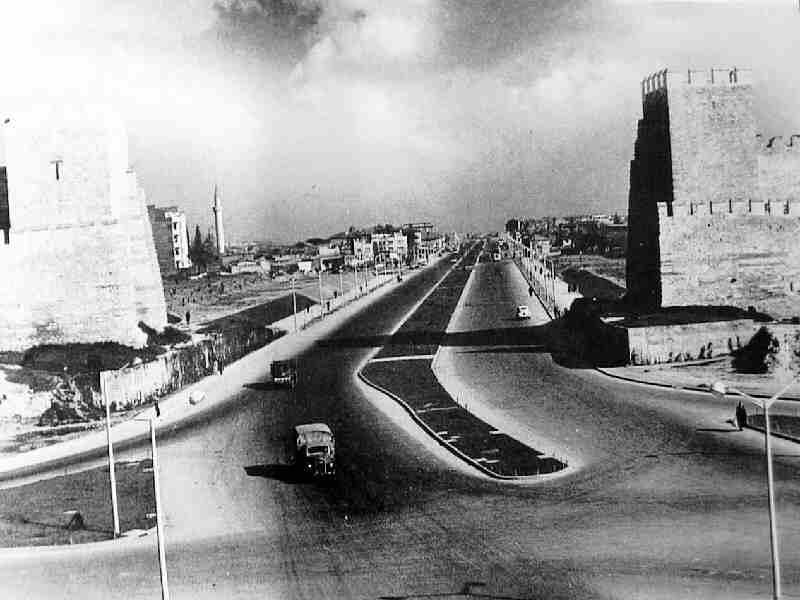
When I returned in 1997, the city was almost unrecognizable to my eyes. Some fifteen years had past, but so little remained the same, or seemed to remain the same.
Pamuk's Istanbul
Hüzün-y!
There was a tram running from Topkapi, the Cannon Gate of the walled city (where I had departed, overland, to Greece on my maiden visit—then, the ‘bus station’ consisted of a muddy field and plywood kiosks serving as ticket booths) down to Sultanahmet, the touristic epicenter of the old city. There was a subway, too, and bars that wouldn’t be out of place in Soho. But the disparity between what I had experienced on the two trips left little doubt that not only had Istanbul changed radically, but I had, too. Parsing these changes, and their degree, has been an important question, critically, in understanding my place in the world. So this year’s occasion of the English translation of Orhan Pamuk’s Istanbul: Memories of the City was a significant and meaningful landmark. Pamuk is ten years older than I am, and his experiences center around the middle-class, European city laying to the north of the Golden Horn, but his account of the "city of sultans," filtered through the eyes of the West—the author argues that Istanbuli cannot, by the circumstance of history, understand their city in any other way—allows this Westerner to make a little more sense of what I experienced over twenty years ago.

Bosporous map detail

Memories has been well-received in the Anglophonic world (and discussed in the litblogs, too); everyone properly focuses on the river of hüzün—that peculiar brand of Stamboul melancholy derived from the loss of Ottoman grandeur—that flows through the city, but there are a few old saws to avoid, too. Pamuk is pointedly wary of the “torn between East and West” interpretation of the Turkish character, one that I had trotted out in my writings when I was lad in trying to describe the men (and it was almost always men, then) I met in my travels, shoeblacks and tea-boys and soldiers, many of who seemed to be carrying the weight of the world on their shoulders. Even when I declined to have my boots shined, they would buy me a beer or take me to Friday prayers.

separator

Many of the more gratifying highlights of the book come when Pamuk describes four of the writers he most admires; one, Reşat Ekrem Koçu, the author of the never-completed Istanbul Ansiklopedisi, spools a discussion that captures the wonder of the city through publishing (!): a tour of other popular Turkish encyclopedias, including the mysteriously-illustrated From Osman Gazi to Ataturk: A Panorama of Six Hundred Years of Ottoman History. Pamuk’s memoir is highly recommended, and—for this reader, who cannot speak the Turkish language and has been unable to find a contemporary social history of the city for some time—essential.

Labels: , , ,

Saturday, September 03, 2005

Baltimore cinema: Marnie

Hitchcock's much-admired Marnie (1964), starring Tippi Hedren and Sean Connery, was never one of my favorites, but when I mention it to Mobtown residents, I often get blank stares. Feast your eyes on these stills (courtesy of Hitchcockmania, an amazing font; the Marnies are here) for a rendition of SoBo and the harbor in the sixties. (It was filmed on block-long Sanders Street, south of Federal Hill and just to the west of Southern High.)

Marnie: Penn StationMarnie: Sanders Street (1)
Marnie: Sanders Street (2)Marnie: Sanders Street (3)

Labels: , ,

West by East

ka‘aba

I think democracy exists in the West because the West has had the novel. And despotism reigns in the East because the East has had poetry. The novel develops the democratic imagination because it offers various paths, various destinies, while poetry is despotic.

—Sorour Kasmai

separator
Nisaburi Virgin with Child
Virgin with Child (1595), from
Nisaburi’s Stories of the Prophets
Bibliothèque Nationale de France

Some have harrumphed that there are a paucity of exhibitions of Middle Eastern artists in the West: this stems, in part, from a variety of reasons that sound suspiciously like Orientalist arguments, but really aren’t. I've long lamented that curators aren’t drawn from broader stock, but it’s well-neigh essential when we’re looking at the Islamic world, where the fine arts are less Western and comingled with religious tradition. Fortunately, the Centre de Cultura Contemporània de Barcelona has enlisted Tunisian writer Abdelwahab Meddeb to curate West By East, an exhibition that examines an “Occidentalist” view of the world, a notion that is gaining strength over the past year (witness this exquisite examination of Istanbul, filtered through Western eyes by future Nobel Laureate Orhan Pamuk). Meddeb, a multidisciplinary character who demonstrates a broad knowledge of the history and culture of both East and West, knows literature and art history (it shows). The Times has a piece on the show in today’s paper; after closing on 25 September, WBE will be decamping for Valencia.

Labels: , , ,

Wednesday, August 31, 2005

Cut

Cut off even in the blossoms of my sin,
Unhousel’d, disappointed, unanel’d,
No reckoning made, but sent to my account
With all my imperfections on my head.

—Hamlet, 1.5.76

separator

I’m, alas, just about buried but not too far away from sending Cut—issue ten of Link—to the printer.
amputation of big toe
My fellow editors (Stephen Janis, Mark Durant, and Janet Little) and I have been dealing with the usual headaches that come from putting out a small, independent journal, but there are pleasures, too: this time, in the form of essays from journalist Eric Trump (on voluntary amputation) and medievalist Kerr Houston (on the cinematic grammar of jump cuts, and how they’ve been quickly absorbed into our visual culture).

I’ll have more to say about their work soon—I’ve been working up a piece on Houston, whose work will interest anyone reading ff—but, in the meantime, the issue previews at the Baltimore Book Festival over 23-25 September in Mount Vernon. Mark your calendars for that Saturday, 24 September, when yours truly and the rest of the gang will be hosting a launch party at the Contemporary Museum, downtown, from 9p until midnight. Alcohol will be served, a dj will be spinning, and Beautiful Losers: Contemporary Art and Street Culture will still be hanging. I hope to see y’all there!

Labels: , , ,

Tuesday, May 03, 2005

More from the television wars: does TV make you smarter?

In last night's episode of "24," the White House and CTU (for those of you not watching, that's the fictitious Counter-Terrorism Unit) are trying to figure out how to get their hands on a Chinese nuclear scientist, who has been collaborating with the bad-guy terrorists who are fixing to detonate a nuclear warhead any moment now. The scientist has sought refuge in the Chinese consulate which, as any amateur diplomat knows, is considered Chinese territory even as it is located on American soil. Jack Bauer, AKA Kiefer Sutherland, moves in to capture the scientist (it is the judgment of those in the U.S. government that they cannot wait for China's premier to sort out the details) and the Chinese consul is killed in the raid.
This is not a good situation, of course, since we've just phoned them asking for the scientist's release—it's safe to say they've pretty much figured out who's behind the attack. The acting consul phones former president David Palmer—in charge of recovering the errant warhead—and demands to know what's going on. Palmer is an interesting character on the show—he's one of those idealized presidents, who is defined by doing the right thing and defying, er, "politics as usual." In short, he's a stand-up, good guy. So there's some tension when he picks up the phone to talk to the acting consul: after all, he just approved an action that could set off an international incident. What does he do?

He lies, of course.
separator

There was a good deal of linking to Steven Johnson's provocative "Watching TV Makes You Smarter" (The New York Times Magazine, 24 April), and some passive dis/agreement, but not a good deal of analysis about the piece. (A noteworthy exception: Dana Stevens's—see, as well, her film writing at The High Sign—"Thinking Outside the Idiot Box," posted at Slate on Monday the 25th, where she pronounces Johnson's claims "deeply, hilariously bogus.") Johnson can be forgiven for asserting the far-fetched: after all, he has a book to flog.

OK: the book and the essay promise more than is delivered, but it doesn't mean that there's no good stuff in Johnson's scholarship. He highlights the character of contemporary television and compares it, favorably, to the golden era of TV (read: the television of our youth). He asserts an increasingly literary texture to the form, convincingly, I think: there is often specialized language and signs as well as a surprising amount of narrative dissociation at any given moment—our moorings are often undone. And then there's the widely quoted multithreadedness of "serious" teevee, too.

I'm heartened to hear my cherished reality television come in for thoughtful treatment: Johnson's observations on gaming culture and its applicability to "Survivor" or "The Apprentice" are novel and explain, in part, the interest of young men in the programs. (The social dimensions of these games—"Survivor" as office politics and the compression, in front of our very eyes, of the "The Bachelorette" mate-selection process—are rich and better-understood, even as they don't figure prominently in the author's thesis.) Finally, as illustrated in the vignette from "24" that opens this post, the sharp writing for even pulpy shows point to genuinely interesting and dramatic dilemmas, well-observed from the nitty-gritty of real life: don't politicians have to lie sometimes? All of this adds up to an entertaining artform that is far more complex than its detractors suppose: all they have to do is open their eyes and—ouch—engage their critical faculties.

See also: Kiss your television, from January.

Labels: , ,

Wednesday, April 13, 2005

A visit to the National Gallery

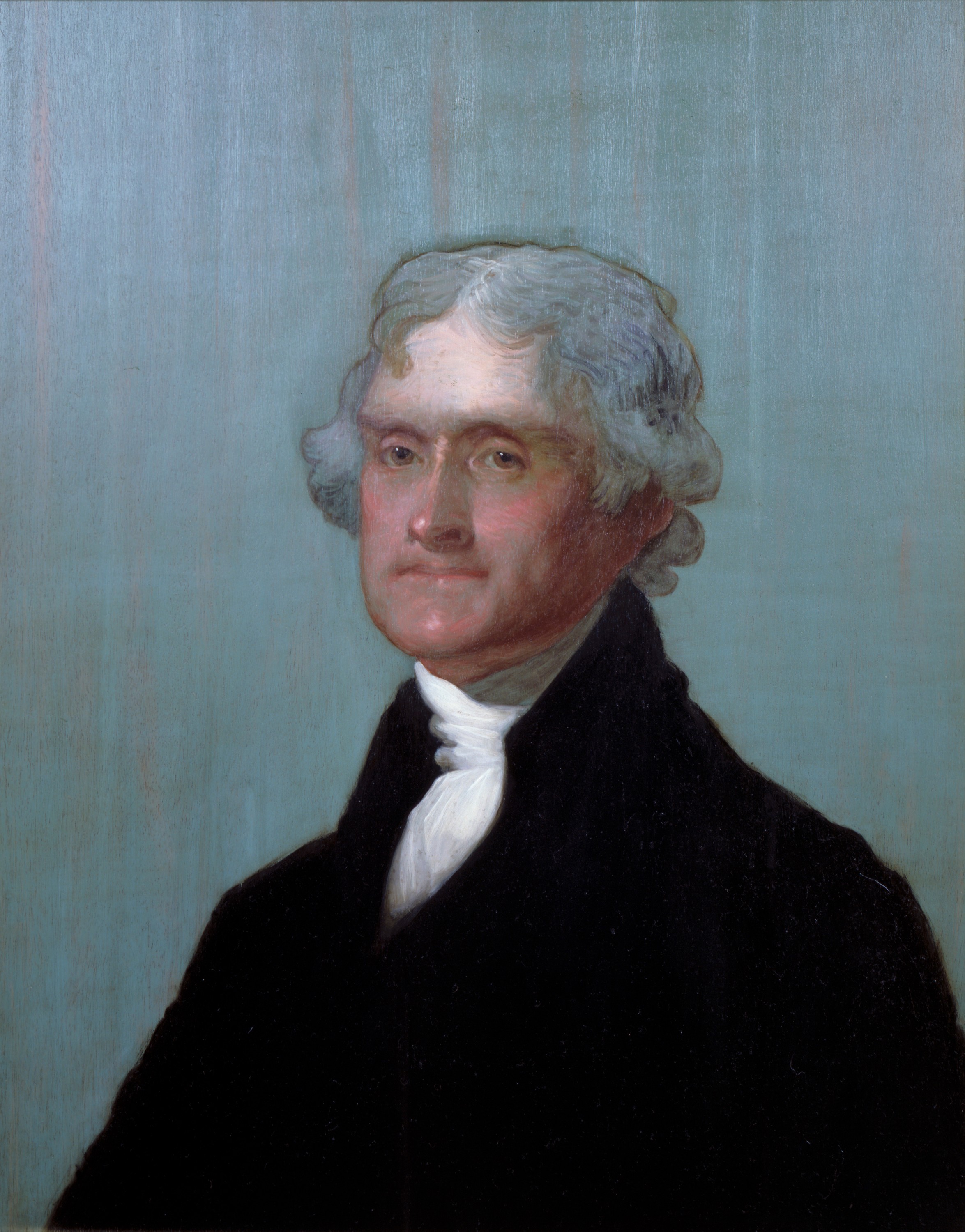
Until yesterday's visit to the exhibition of Stuart portraits in the NGA's west building, the last time I spent as much time with a Gilbert Stuart portrait was in an elementary school classroom watched over by the stern visage of George Washington. In a pre-modernist time—the presidential portraits are largely from the early nineteenth century—the paintings do not reveal as much of the artist as we have come to expect: the works are about the man or woman sitting for the portraitist, resulting in a heightened verisimilitude for the painting's subject. This visual verisimilitude dovetails with the intimacy we feel for these historical figures, having grown up with their stories, learning and reading about them in history class, in our touristic endeavors, and in private scholarship; the effect of these visual and psychological echoes are reinforced further by the realization that these are recognizable American physiognomies (one can easily imagine James and Dolley Madison as a couple, and can ascribe a sort of effeteness to the man). They're cool and fun to sit with.

In addition, the paintings are far more vivid than I remembered (poor reproductions? colors faded from fluorescent lights?), and extremely well-done. The excellent portrait of Thomas Jefferson [inset] is posted to mark the 262nd anniversary of Thomas Jefferson's birth, today.

Andy Goldsworthy's Roof (2005) is terrific: installed on the terrace (and a little of the building's interior) on the left as one enters the NGA's east wing, I was transported back to the study of analytic geometry, where a plane intersects one of the conic sections (an hyperboloid? a paraboloid?): the plane of the window to the terrace cuts some of the domes in two; they are virtually continued on the other side. "Orderly and witty," notes the Post.

Rushed, I didn't have as much time as I'd have liked to visit with the Kertész photographs—the earliest ones (sample, but not one of the best) are but a few square inches in area—and recent acquistions from the print collection; they're worth a return visit.

Labels: , , , ,

Tuesday, April 12, 2005

Political art

Even good political art tends to be tedious (say, Hans Haacke, for instance): no matter how smart it is, I tend to want to repair to the bar. And, of course, most of what passes for political art is a simple declaration of one's beliefs—often pacifist, or anti-Bush—and that generally looks like a bumper sticker, or not really art at all.

Duchamp's Fountain
But the best political art illuminates the, ahem, power structure and how we relate to it: think Marcel Duchamp's Fountain (1917), a urinal that was submitted to frustrate the Society of Independent Artists—Duchamp himself was a member—a group whose slogan was "No juries, no awards." The artist magically transformed a simple, utilitarian object into a conundrum and a legendary artwork with the simple act of submitting the "fountain" with the required entrance fee: this elegant idea is a remarkable and art-historical twofer, elevating the ordinary and exploding the power structure of the artists' world itself.

ONT Franken
Julia Kim Smith, Francesca Danieli, and David Beaudouin have produced a short film with similar staying power: entitled One Nice Thing, it implores political partisans from the national party conventions of 2004 to "say one nice thing about" Republicans or Democrats, depending on your political allegiance, and "really mean it." The nine-minute-and-twenty-second short surveys the Democrats and asks them to be nice to Republicans, and vice versa.

The results are far from surprising: you get folks who flat-out refuse to make nice, and folks who say their opponents are potential converts to the cause. Some identify individuals in the opposing party whom they admire (Lincoln is a favorite). Another tack involves citing family members who do not share political affiliations with the interviewee, and so on. Thoughtful answers are rare and, as a result, surprising (the best one? probably from former congressman and knucklehead MSNBC conservative pundit Joe Scarborough!). What results is not so much a list of what's right about politicians and politics as it is an illumination of what's wrong with us, a meditation on why we personally can't find common ground with our political opponents, a laser-like focus on how political opinion attaches to each individual's identity.

What do our political leanings, our political speech say about us? About others? One Nice Thing suggests that we carve out a little bit of time to think about those questions, and that each partisan might profit from this redemptive place. The film was an official selection of the 2005 Sedona International Film Festival & Workshop, as well as for the upcoming 2005 Maryland Film Festival. ONT deserves your support and some quiet contemplation: say one nice thing about your opponents today!

Labels: , ,