Wednesday, April 05, 2006

Death Disco

The joke, of course, may well be on me if fifteen years from now
everything on the radio sounds like this.
But it wouldn’t surprise me too much.

—On Second Edition, from the
August 1980 issue of
Stereo Review

separator

PiL performing “Death Disco”
“Top of the Pops,” 21 July 1979

Simon Reynolds’s justly hailed (and newly released, stateside) Tear It Up and Start Again: Postpunk 1978-1984 [the book’s website is here, on Amazon here, and flogged on Slate here] has shone the spotlight on PiL’s first big American single, “Death Disco” (later redubbed “Swan Lake” for its Metal Box/Second Edition release on LP) : Reynolds cites the television performance on the BBC’s “Top of the Pops”—the UK’s answer to “American Bandstand”—as one of the seminal musical moments in his young life. Inevitably, a clip has surfaced on YouTube, and a small viewer is posted here for your listening pleasure (and more, with Lydon’s plaid suit and Wobble’s leering, toothy grin—he’s sitting on a dentist’s chair for the duration).

separator
Death Disco clip
“Swan Lake,” 7" sleeve (1979)

“Swan Lake” still sounds great—it feels as alien and as winsome as it did in 1979, when I’d sit, hunched over a speaker, trying to make sense of what seemed like pop, but also quite unlike pop. Cannily transposing Tchaikovsky’s theme to anchor the composition, they are the only notes given to the guitar (Wobble’s bass shoulders the lead). But it was the new end tacked onto the LP version—and not heard on the TotP clip—that really got me, and still does: it sounded like nothing I had ever heard before. Some 3:50 into the selection, a passage that is anchored by a bubbling, atonal bass line and punctuated by a shimmering synth aurora borealis (foreshadowed a few dozen seconds prior) is clipped, and cut-and-paste-repeated four additional times. More than a decade of studio magic—overdubbing and looping—had preceded the release of Metal Box, and yet there was something radical about the simple juxtaposition of the clip with itself, and its abrupt beginning and end that seemed to herald the dawning of a new pop. It may be that all music crit is an elaborate justification of taste, but Second Edition—hey, it’s less than $7, new!—is worth sampling at twice the price.

Labels: , ,

Friday, November 11, 2005

Camouflage survey

It all started with a great score from Daedalus, a book I’ve been looking for for some time: designer Hardy Blechman’s Disruptive Pattern Material: An Encyclopedia Of Camouflage (Firefly, 2004—it had previously been available only under a British imprint) for a cool $30—go and check it out at the source, or see Steven Heller’s review in Eye, or the one in Boldtype.

And then, in rapid succession: a BB post on dazzle camouflage, followed by a call for papers for the upcoming Camouflage: Art, Science and Popular Culture, to be held at the University of Northern Iowa Department of Art on Saturday, 22 April 2006. (The conference is organized by Roy R. Behrens, whose False Colors: Art, Design and Modern Camouflage—Bobolink, 2002—is the wonky yang to Blechman’s stylish yin; proposals are due by 10 January 2006.)

dazzle Fiat Strada
A dazzly paint-job.

Some snips: in 1917, at the height of the U-boat scare during WWI, a former marine artist, designer, and illustrator—one Lt. Cdr. Norman Wilkinson of the Royal Navy—was assigned to a team tasked with visually altering British ships to improve maritime survivability. Interestingly, dazzle (as it came to be known) did not operate as conventional camouflage—which typically masks a body’s visibility—usually does: dazzle creates a vibrating visual field which makes it difficult for a human observer to accurately determine the position and heading of a potential target, crucial inputs for a successful torpedo-er (prior to the age of radar, sonar, and computerized navigation). Wilkinson’s band tested candidates by painting models and testing their effectiveness by rigging a turntable, water, and periscope optics. (The U.S. and France would follow suit, usually employing fine artists in the endeavor.)

DPM is a rich visual sourcebook, one that gets you heading in all sorts of fruitful directions: it covers camouflage in the natural world, in warfare (of course), but also provides fashion and pop images that serve as great fodder for free-association. Me? I’ve been pondering the morphing of camo from utilitarian to semiotic signal of the military, patriotism, and plainspeaking Americanism (in our fair city, football fans have adopted the uniform, with a bit of tailoring). And in the Costume Institute’s Extreme Beauty: The Body Transformed (from 2001), one thread concerned the utility of fashion in hiding unflattering body parts.

For the scholars: a camouflage bibliography, courtesy of Behrens.

Venus de Milo
Venus de Milo
Eva Green as Venus de Milo
Eva Green in
The Dreamers

Addendum: From a scene in Bernardo Bertolucci’s awkward and forced Dreamers, actress Eva Green is depicted as the Venus de Milo when she camouflages her arms by wearing long black gloves and standing in a dark doorway, dressed only in drapery surrounding the hips. [cws::13 Nov]

Labels: , , ,

Friday, October 28, 2005

Kinsley on Pynchon

Crying of Lot 49

You can't knock the names, though. Above all, there is the wonderfully Pynchonesque Valerie Plame.

—Michael Kinsley, from today’s op-ed on the “bewildering scandal of the moment.”

Labels: ,

Thursday, October 20, 2005

Baltimore’s best bookstores

Woman with kangaroo
Woman with kangaroo, from the
September 1963 National Geographic

In our faire towne, there are too few bookstores to award the titular honor to any establishment—we need more, and better bookstores, dammit—but I wish to plug two local places that don’t get their fair share of praise: the Book Thing and Daedalus Books (in Columbia, but who’s counting?)…

A little over a week ago, I visited the Book Thing for the first time since their relocation in the spring to the former home of Micro Records Company, a microfiche storage service, at 3001 Vineyard Lane in Waverly. (To readers from outside of Charm City: the Book Thing is a clearinghouse for donated books, with an unusual wrinkle—they charge nothing for their wares.) The new, spacious digs make a BT outing much less frustrating than one to the old space on the alley near 27th Street; on the rainy Sunday I stopped by, some plastic and a few trash cans protected the bookshelves from a leak in the roof, but the place was open, cozy, and patronized by only a few browsers. I collected two medical books, several old Christian Science prayer books (with handwritten inserts and notations), and an armful of old National Geographic magazines, culled for unusual imagery (see sample to the left).

Daedalus has long been a personal favorite of mine; they specialize in quality remaindered books, and stock a great number of volumes from university presses at ridiculously low prices, usually at five to seven dollars each. In addition, there are any number of excellent visual sourcebooks, from the serious to the silly—on a visit earlier in the week, I scored codices ranging from The English Garden: A Social History to Harold Lloyd’s Hollywood Nudes in 3D!, a collection of color photographs snapped by silent film actor and amateur photographer Harold Lloyd, who had access to an early camera that took stereoscopic pictures (to make your own, go here). The coffee-table book comes with 3-D glasses that, aptly, look like Harold’s. A sample—from a series of models in Monument Valley (!)—is pictured to the right.

Labels: , ,

Monday, September 05, 2005

Pamuk’s Istanbul, and mine

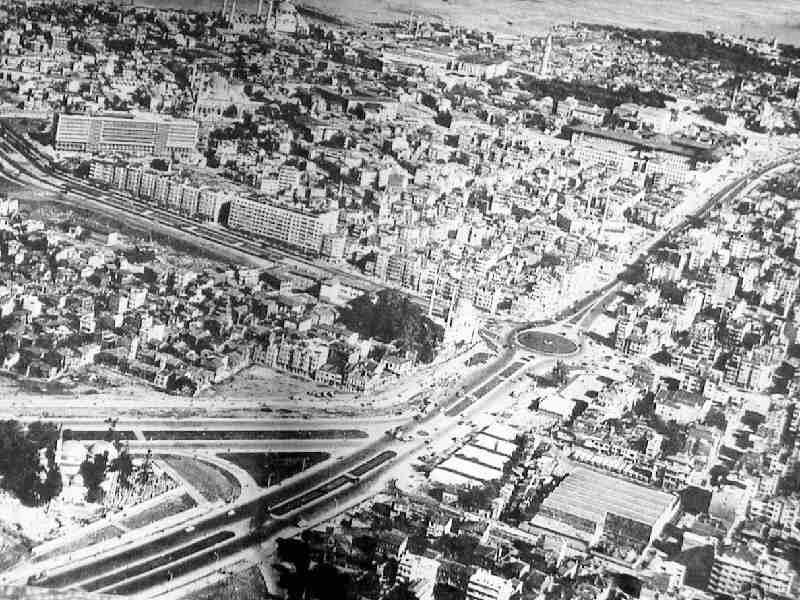
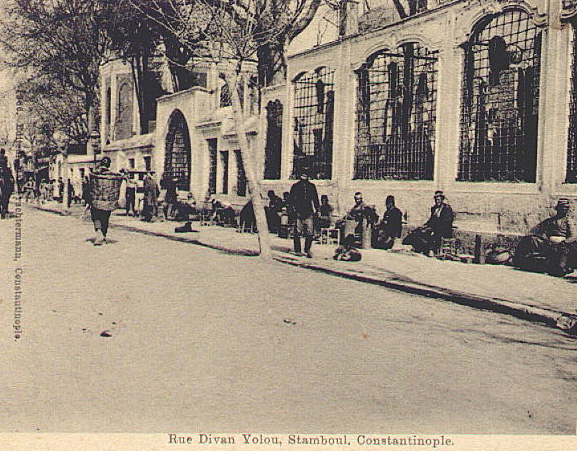
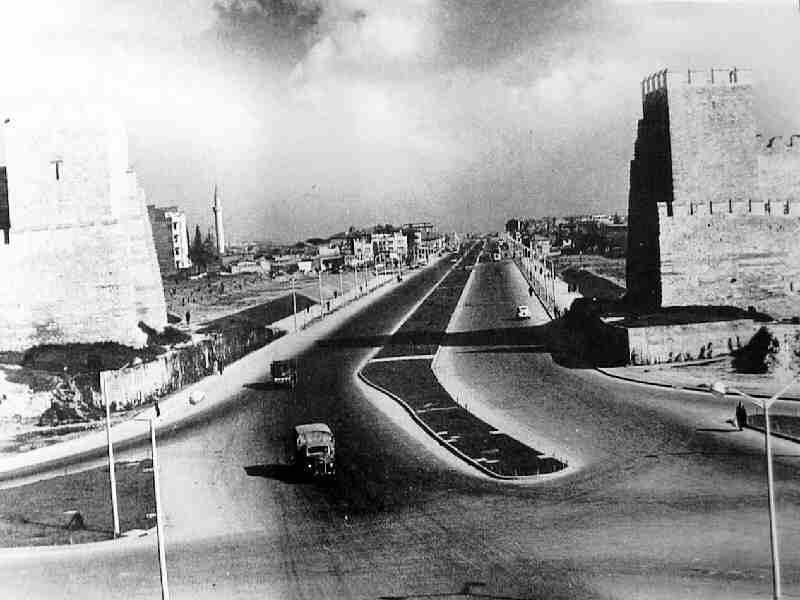
I impulsively journeyed to Istanbul as a young man in the early 1980s, after I discovered a Victorian travelogue (Constantinople: City of the Sultans, by Clara Erskine Clement) in a Santa Barbara antiquarian bookstore (here, I think, though I can no longer be certain). It was a peculiar time to visit—I arrived to guns on the tarmac unaware that the city was under martial law, and that the Turkish economy was in shambles—but in many ways it was the perfect moment. Even as the population had grown steadily since the 1960s (and was to take off around 1980), much of the boom was on the Asian side of the Bosporus, as well as on the outskirts of the European city, in sprawling shantytowns I encountered on the bus-ride from the airport to the old city.
Istanbul panorama
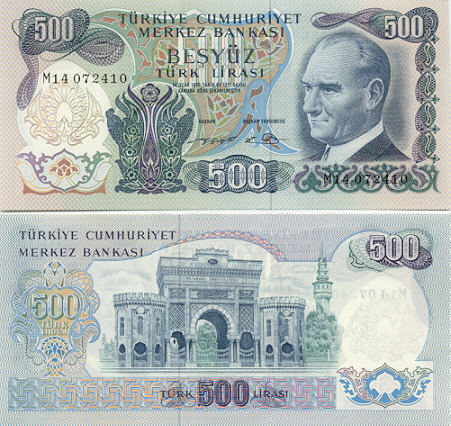
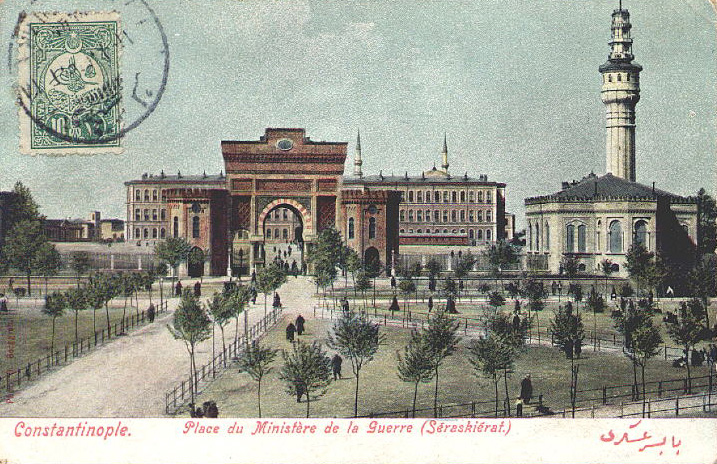
Upon disembarking in Acksaray, walking down the muddy, semi-paved street towards Sultanahmet, I wandered (and wondered) for weeks, primarily on the south side of the Golden Horn—haunting the mehanes, the pudding shops, and the dark tea houses with raki-drinking, television-watching, middle-aged men, the omnipresent visage of Atatürk overlooking the proceedings; streets filled with the clacking of printing presses (plus the occasional chorus from Thriller) and narrow passageways with old men smoking hookahs; the heavy quiet of Beyazit Square on a hot summer afternoon, with a nearby convenience store on the southern outskirts selling lukewarm ayran, or warm Pepsi out of wooden crates, or black currant juice (my favorite); the outdoor market amidst traditional wooden houses in Vezneciler, with tables of slender, striated Asian eggplant; the medical school with the fluorescent-lit vitrines, showcasing hand-painted, plastic models of the human body; the rural snack-sellers of simits, roasted ears of corn, cucumbers-peeled-before-your-eyes, and the minced-mussel sandwiches vended by watermen.

separator

When I returned in 1997, the city was almost unrecognizable to my eyes. Some fifteen years had past, but so little remained the same, or seemed to remain the same.
Pamuk's Istanbul
Hüzün-y!
There was a tram running from Topkapi, the Cannon Gate of the walled city (where I had departed, overland, to Greece on my maiden visit—then, the ‘bus station’ consisted of a muddy field and plywood kiosks serving as ticket booths) down to Sultanahmet, the touristic epicenter of the old city. There was a subway, too, and bars that wouldn’t be out of place in Soho. But the disparity between what I had experienced on the two trips left little doubt that not only had Istanbul changed radically, but I had, too. Parsing these changes, and their degree, has been an important question, critically, in understanding my place in the world. So this year’s occasion of the English translation of Orhan Pamuk’s Istanbul: Memories of the City was a significant and meaningful landmark. Pamuk is ten years older than I am, and his experiences center around the middle-class, European city laying to the north of the Golden Horn, but his account of the "city of sultans," filtered through the eyes of the West—the author argues that Istanbuli cannot, by the circumstance of history, understand their city in any other way—allows this Westerner to make a little more sense of what I experienced over twenty years ago.

Bosporous map detail

Memories has been well-received in the Anglophonic world (and discussed in the litblogs, too); everyone properly focuses on the river of hüzün—that peculiar brand of Stamboul melancholy derived from the loss of Ottoman grandeur—that flows through the city, but there are a few old saws to avoid, too. Pamuk is pointedly wary of the “torn between East and West” interpretation of the Turkish character, one that I had trotted out in my writings when I was lad in trying to describe the men (and it was almost always men, then) I met in my travels, shoeblacks and tea-boys and soldiers, many of who seemed to be carrying the weight of the world on their shoulders. Even when I declined to have my boots shined, they would buy me a beer or take me to Friday prayers.

separator

Many of the more gratifying highlights of the book come when Pamuk describes four of the writers he most admires; one, Reşat Ekrem Koçu, the author of the never-completed Istanbul Ansiklopedisi, spools a discussion that captures the wonder of the city through publishing (!): a tour of other popular Turkish encyclopedias, including the mysteriously-illustrated From Osman Gazi to Ataturk: A Panorama of Six Hundred Years of Ottoman History. Pamuk’s memoir is highly recommended, and—for this reader, who cannot speak the Turkish language and has been unable to find a contemporary social history of the city for some time—essential.

Labels: , , ,

Thursday, April 14, 2005

On manliness

Contrary to what you might first think, pragmatism is a philosophy, not the dismissal of philosophy. And Teddy Roosevelt was more a philosopher than he knew. His advocacy of manliness reflects the difficulties of pragmatism and tells us something about our situation today. We have abandoned—not reason for manliness like the pragmatists, nor manliness for reason like their tender-minded opponents—but both reason and manliness. We want progress without a rational justification and without the manliness needed to supply the lack of a justification.
From Harvey Mansfield's "The manliness of Theodore Roosevelt," in The New Criterion; his essay is excerpted from A Modest Defense of Manliness, forthcoming from the Yale University Press (2006).

Labels: , ,