Saturday, September 03, 2005

West by East

ka‘aba

I think democracy exists in the West because the West has had the novel. And despotism reigns in the East because the East has had poetry. The novel develops the democratic imagination because it offers various paths, various destinies, while poetry is despotic.

—Sorour Kasmai

separator
Nisaburi Virgin with Child
Virgin with Child (1595), from
Nisaburi’s Stories of the Prophets
Bibliothèque Nationale de France

Some have harrumphed that there are a paucity of exhibitions of Middle Eastern artists in the West: this stems, in part, from a variety of reasons that sound suspiciously like Orientalist arguments, but really aren’t. I've long lamented that curators aren’t drawn from broader stock, but it’s well-neigh essential when we’re looking at the Islamic world, where the fine arts are less Western and comingled with religious tradition. Fortunately, the Centre de Cultura Contemporània de Barcelona has enlisted Tunisian writer Abdelwahab Meddeb to curate West By East, an exhibition that examines an “Occidentalist” view of the world, a notion that is gaining strength over the past year (witness this exquisite examination of Istanbul, filtered through Western eyes by future Nobel Laureate Orhan Pamuk). Meddeb, a multidisciplinary character who demonstrates a broad knowledge of the history and culture of both East and West, knows literature and art history (it shows). The Times has a piece on the show in today’s paper; after closing on 25 September, WBE will be decamping for Valencia.

Labels: , , ,

Wednesday, April 13, 2005

A visit to the National Gallery

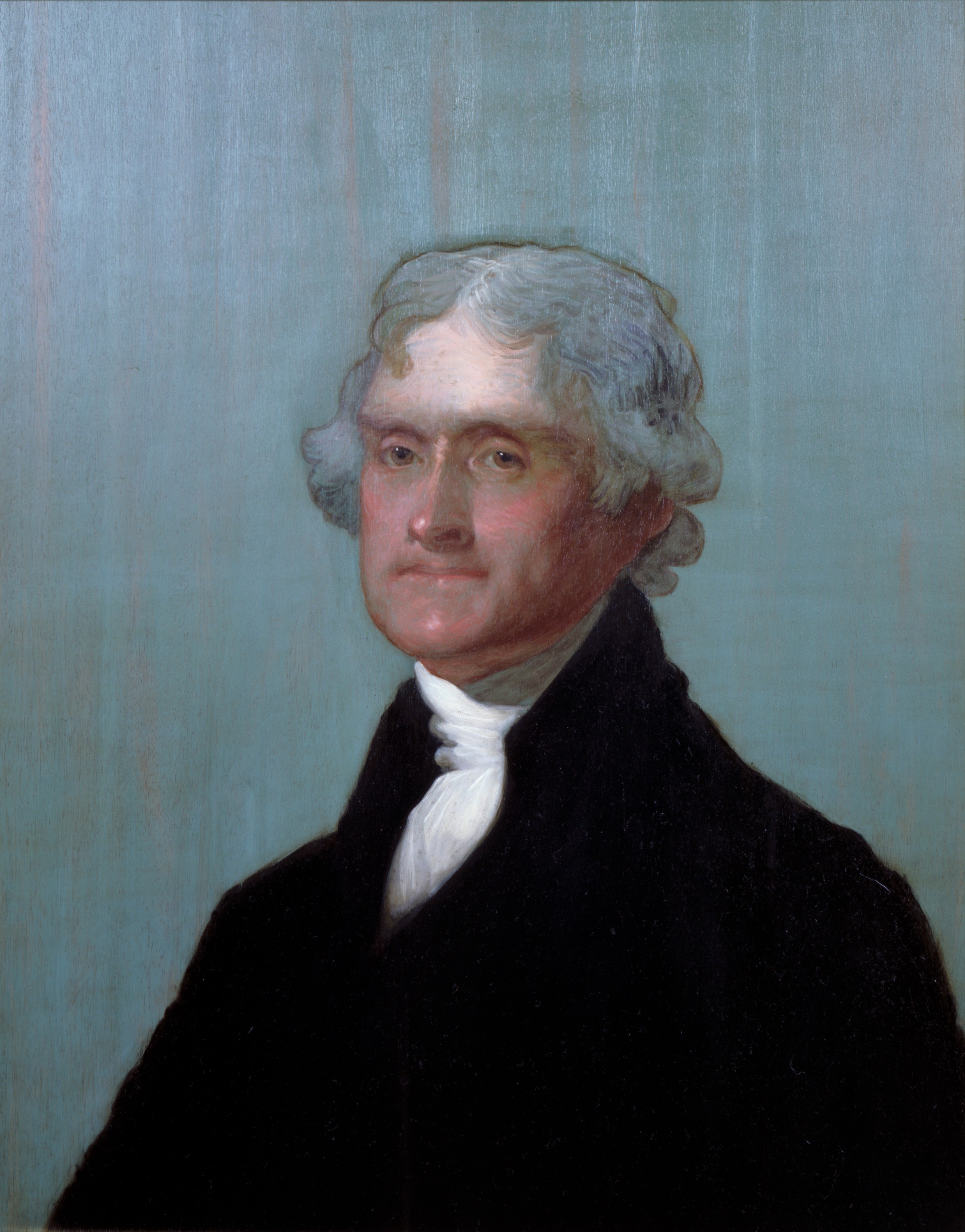
Until yesterday's visit to the exhibition of Stuart portraits in the NGA's west building, the last time I spent as much time with a Gilbert Stuart portrait was in an elementary school classroom watched over by the stern visage of George Washington. In a pre-modernist time—the presidential portraits are largely from the early nineteenth century—the paintings do not reveal as much of the artist as we have come to expect: the works are about the man or woman sitting for the portraitist, resulting in a heightened verisimilitude for the painting's subject. This visual verisimilitude dovetails with the intimacy we feel for these historical figures, having grown up with their stories, learning and reading about them in history class, in our touristic endeavors, and in private scholarship; the effect of these visual and psychological echoes are reinforced further by the realization that these are recognizable American physiognomies (one can easily imagine James and Dolley Madison as a couple, and can ascribe a sort of effeteness to the man). They're cool and fun to sit with.

In addition, the paintings are far more vivid than I remembered (poor reproductions? colors faded from fluorescent lights?), and extremely well-done. The excellent portrait of Thomas Jefferson [inset] is posted to mark the 262nd anniversary of Thomas Jefferson's birth, today.

Andy Goldsworthy's Roof (2005) is terrific: installed on the terrace (and a little of the building's interior) on the left as one enters the NGA's east wing, I was transported back to the study of analytic geometry, where a plane intersects one of the conic sections (an hyperboloid? a paraboloid?): the plane of the window to the terrace cuts some of the domes in two; they are virtually continued on the other side. "Orderly and witty," notes the Post.

Rushed, I didn't have as much time as I'd have liked to visit with the Kertész photographs—the earliest ones (sample, but not one of the best) are but a few square inches in area—and recent acquistions from the print collection; they're worth a return visit.

Labels: , , , ,